What is a retirement village?
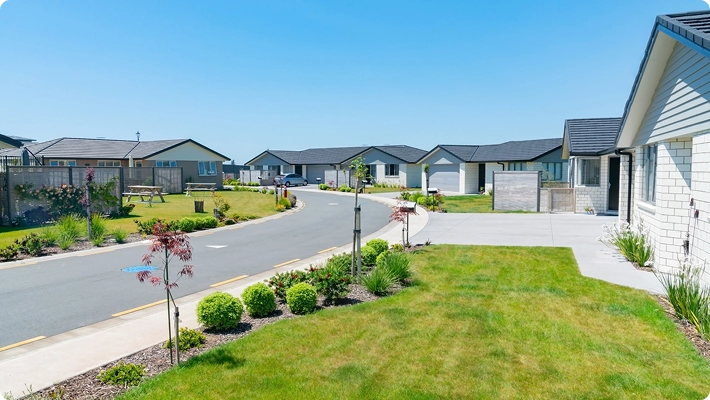
A retirement village is a purpose-built residential community for people of a similar age that offers independent and assisted living options alongside shared amenities like community centres, gyms, and cafes. Retirement villages offer residents a low-maintenance lifestyle, companionship, security, and support.
Key takeaways
- Retirement villages are designed for people who want to enjoy a secure, low maintenance lifestyle with easy access to amenities, leisure activities, and support.
- Retirement villages foster social interaction, companionship, and wellbeing.
- Each village is different in terms of entry age, amenities, living and care options.
- Buying into a retirement village is not a property investment, in most cases you will not receive capital gains when you leave the village.
Who lives in a retirement village?
Retirement villages are designed for people at a similar life stage who want to enjoy a secure, low maintenance lifestyle with easy access to amenities, leisure activities, and support. The minimum entry age is typically 70 and up, but this varies by village.
You may come across villages described as ‘lifestyle villages’. These often have a lower entry age and can differ slightly in how their licence to occupy is structured, with capital gains clauses appearing more frequently. However, they may not offer a full continuum of care and can have fewer shared facilities. For some, that suits perfectly. It comes down to what you’re looking for, personally and financially.
What does a retirement village offer?
Retirement villages come in all shapes and sizes, from small and boutique to large and resort-like. Independent living options and facilities also range widely, from one, two or three bedroom villas, townhouses and apartments to studio apartments.
Some villages also have assisted living and care options to provide additional support as needed. These villages tend to have a higher entry age than villages with no care facilities. Ryman Healthcare, Summerset Group, Oceania Healthcare, Arvida Group, Bupa New Zealand, and Metlifecare are the largest retirement village operators in New Zealand, all of which offer a wide range of living options.

The benefits of village life
Retirement villages offer residents low maintenance living, eliminating the stress that comes with looking after a home and garden or hiring someone else to do it. Less work around the house means more time for favourite pastimes, whether that’s travel, hobbies, or spending time with the grandchildren.
As we age, social connection becomes an important contributor to our wellbeing. Many retirement villages offer shared spaces and activities that promote social interaction and wellbeing. These can include communal lounges and dining areas, libraries, craft rooms and a residents’ workshop, gyms and swimming pools, gardens, BBQ areas, and pet friendly zones.
Villages can make everyday living easier by providing amenities like transport in a village van, an in-house hairdresser, a restaurant to entertain family and friends, or ready-made meals so you can take a night off from cooking. Every village is different, so it’s a good idea to make a list of what’s important to you and look closely at what each village offers.
Financial considerations
In most cases you won’t own the home you move into. Instead, you purchase a ‘licence to occupy’. This means you typically won’t receive capital gains when you leave the village, even if property values have increased. Some villages may offer the possibility of capital gain, but these are less common and usually come with other contractual considerations. However, if you've downsized from the family home to buy into a village, you could realise the capital gain from selling your house then, ideally with some funds left over to travel, pursue your hobbies, or take the grandchildren on a family holiday.
An Occupation Right Agreement (ORA) is the main contract you sign with the village operator. It sets out the terms of your residency. A licence to occupy is the most common type of ORA used in New Zealand retirement villages. It gives you contractual rights to live in the unit, access the village’s services and facilities (as set out in the ORA), and receive the agreed repayment when the agreement ends.
To buy into a village you’ll be required to pay a deposit or capital sum upfront, a weekly or fortnightly fee to contribute towards the day-to-day operating costs while you’re living in the village, and a deferred management fee when you leave. There may be other costs, for example, if you transfer to another unit or into care within the village at a later stage, so it’s important to read the disclosure documents carefully and ask questions so that you are fully aware of what you are getting and any costs you may incur.
Summary
While there are many benefits to retirement village living, there are also some important considerations. Buying into a retirement village is not a property investment, but rather you are buying a lifestyle that provides you with ease, social connection, security, and support.
Frequently asked questions
What is the difference between a retirement village and a rest home?
A retirement village is designed for people who are living independently but want a lower maintenance lifestyle, social connection, security, and access to support if needed. A rest home provides a higher level of daily care and support for people who can no longer live independently.
Some retirement villages also have an on-site care facility offering rest home, hospital, or dementia level care, but not all villages provide this.
What age can you move into a retirement village?
The minimum entry age is usually around 70, although this can vary between villages. Some lifestyle villages may allow residents to move in at a younger age.
Do you own your home in a retirement village?
In most New Zealand retirement villages, you do not own the property in the same way as a standard home. Instead, you usually purchase a licence to occupy under an Occupation Right Agreement (ORA), which gives you the right to live in the unit and access village facilities and services, while the operator retains ownership of the property and land.
What fees do you pay in a retirement village?
Most retirement villages require:
- An upfront capital payment
- A weekly village fee
- A deferred management fee (DMF) when you leave
Are retirement villages cheaper than owning a home?
It depends on your situation and the village you choose. Retirement villages are not generally designed as a financial investment. Instead, many people choose village living for the lifestyle benefits, reduced maintenance, security, social connection, and access to support.
What happens if your health declines?
Some villages offer a continuum of care, meaning residents may be able to move from independent living into assisted living or aged care within the same village. Other villages may only offer independent living, so it’s important to ask what support and care options are available.