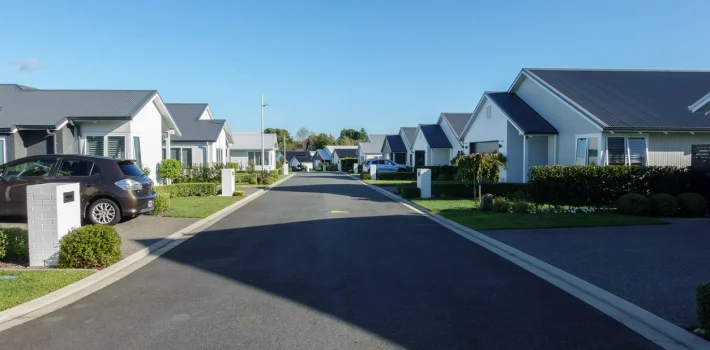
New Zealand is projected to face a major retirement village shortfall, with 11,284 fewer units than needed by 2033 and a 23,241-unit gap by 2048. Consents for new units have fallen 30% in the past year, even as demand continues to rise. Affordable rental-based options remain limited, highlighting the need for broader development and more diverse housing models for older New Zealanders.
NZ’s ageing population is growing faster than retirement village supply
New research shows New Zealand is not on track to meet the future demand for retirement village housing - a trend that has major implications for older New Zealanders, families, and the wider health system.
According to JLL’s latest report, Perspectives on New Zealand’s Retirement Villages, the number of retirement village units being built simply isn’t keeping pace with the country’s ageing population.
Bishop says the findings highlight growing pressure on the already limited supply of suitable housing for older adults.
New Zealand needs 60,256 retirement village units by 2033, yet we’re only on track to have around 48,972 - leaving a shortfall of more than 11,284. By 2048, that shortfall grows to 23,241.”
Development slowing when demand is rising
New data from Stats NZ shows that consents for retirement village units are down 30% from last year, raising concerns that the construction pipeline is slowing at the exact moment demand is accelerating.
Suitable housing is a key contributor to quality of life for older adults. A recent report by the Helen Clark Foundation, Age Proofing Aotearoa, found that safe and appropriate housing supports independence, safety, and wellbeing — and retirement villages play a major role in this.
“Villages help people stay independent for longer, often delaying the need for residential care and easing pressure on the wider health system,” says Bishop.
Village Guide research shows strong and growing interest
Village Guide’s own national research, based on responses from nearly 3,200 New Zealanders aged 65+, reflects this growing demand:
- 10% already live in a retirement village
- 15% are considering a move
- 80% of those considering plan to move within five years
Combined with slowing development, this highlights a widening gap between demand and availability.
What this shortage means for older New Zealanders and their families
1. Fewer units will be available in the coming years: This means popular villages may have longer waitlists, fewer vacancies, and more competition for the type of home you want (e.g., one-bedroom, two-bedroom, serviced apartments).
2. Planning early becomes much more important: If you think a retirement village might be part of your future, it will help to start exploring earlier, ideally 3–5 years before you plan to move. This gives you time to understand your options, visit villages, and join waitlists.
3. Prices may continue to rise: When supply is tight and demand is high, the cost of entering a village may increase over time. Early planning gives you more time to compare options and understand contract types.
4. Alternative models (like rentals) are still very limited: If you’re hoping for a rental-based or more affordable model, these are currently hard to find. Advocacy is growing, but availability is still low; something families should factor into long-term planning.
5. Demand will be high for “care-ready” homes: Units with care support available onsite (or nearby) may become even more sought-after as the population ages. If this is important to you, joining waiting lists early and understanding care-pathway options becomes essential.
6. Families may need to support parents earlier: If suitable village options are harder to find, families may need to assist with:
- interim housing
- modifying existing homes
- helping with waitlist navigation
- care planning
Understanding the landscape early can reduce stress later.
7. Regional differences will get even sharper: Some regions may have significant shortages while others have planned growth. Village Guide’s comparison tools can help families understand where supply is strongest.
Limited alternatives - important for families to understand
Most retirement villages in New Zealand use a licence-to-occupy contract. While this works well for many people, it’s not the right financial fit for everyone.
Rental-based or lower-cost alternatives do exist in small pockets - like the affordable homes provided through Haumaru Housing in Auckland - but options like this are still limited nationwide.
Village Guide regularly hears from people searching for:
- rental-only villages,
- affordable fee structures,
- or alternatives to a large upfront payment.
Right now, these choices are very limited, which is important to factor into long-term planning.
A call to action
To support New Zealand’s ageing population, Bishop says the country needs to:
- Modernise planning, consenting, and regulation to support village development
- Expand government-supported and community-led housing models
- Increase the diversity of options so older people can choose what best suits them
- Create more accessible pathways for those who cannot afford licence-to-occupy models
“It’s about giving people the chance to age well in homes that feel safe, supportive, and right for them.”
Further reading
How Kiwis Choose Retirement Villages: New Research
5 Key Questions to Ask Before Moving to a Retirement Village


