Involving your family in your retirement village search

Making the move to a retirement village is a big step, one that has emotional, financial and lifestyle implications, so your family is likely to have questions and possibly a few concerns. Getting family members involved in the process can help ease the transition for both you and your family.
Key takeaways
- Set expectations and boundaries early about what level of involvement you’d like your family to have in the process.
- Bring your family on village visits and information sessions as they may pick up on things you haven’t thought of.
- Ask the sales manager to meet with your family to address their questions and concerns.
- Always seek independent legal and financial advice from experts when it comes to reviewing contracts and financial terms.
- Retirement village contracts can raise questions for family members, so engaging them in these conversations will help everyone feel informed and comfortable.
Set expectations early
Moving homes can be a sensitive topic for some families, especially if you’re considering selling a home that’s been in the family for a long time.
When you tell your family that you’re looking into retirement villages, they may ask you questions you don’t yet know how to answer, or they might start researching villages on your behalf.
Whether you’d like a lot of help at this stage – or none at all – it’s a good idea to clearly communicate why you want to move and what you’re looking for so that you all share the same understanding, goals, and expectations.
Get help with your homework
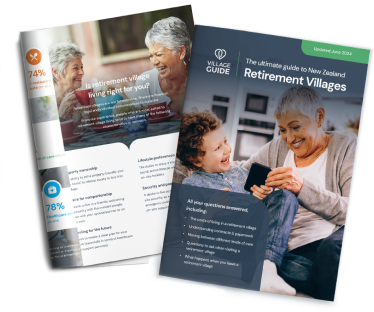
You and your family are likely to have lots of questions, but before you begin looking at specific villages, it’s a good idea to understand how retirement villages work in New Zealand. Village Guide’s Resource Centre provides independent, up-to-date information, so it’s a great way for you and your family to get up to speed.
We recommend you start by downloading, The ultimate guide to New Zealand Retirement Villages. This guide answers the most frequently asked questions about retirement villages, including topics such as:
- The costs of living in a retirement village
- Understanding contracts and paperwork
- Moving between different levels of care
- Questions to ask when visiting a retirement village
- What happens when you leave a retirement village
Once you and your family have gained a better understanding of the industry, you can begin prioritising what’s important to you and looking for villages that best meet your needs.
Visit villages together
If you’d like your family’s opinion on your preferred villages, bring them along to open days and information sessions.
Family members are always welcome at open days and often spot things you may have missed or ask questions you didn’t think to ask. The more they know about each village you’re considering, the more comfortable they’re likely to be.
Speak to the experts
Village sales managers can talk you and your family through how the village operates, including the services, facilities, costs, and the process if your needs change over time, such as transferring to a different home or moving into higher-level care.
Buying into a retirement village is different from buying other residential property. The financial structures, legal titles, and terms of occupation can also vary between retirement villages, so it’s important to have a good understanding of how they work. Under New Zealand law, you must receive independent legal advice from a lawyer before signing an Occupation Right Agreement, and the lawyer must certify that they have explained the agreement to you.
It’s a good idea to look for a lawyer with relevant industry experience. Your lawyer will go through the key terms, including your rights and obligations as a resident, the fees and costs you will pay, and what happens to your payments and occupancy rights when you leave the village or move into higher-level care. Retirement village contracts can raise questions for family members, so engaging them in these conversations can help everyone feel more informed and comfortable with the options being considered.
Summary
Moving into a retirement village is a life-changing decision for many people and your family can be a welcome source of support. Involving family members in your retirement village search can provide reassurance, clarity, and peace of mind for everyone involved.
Frequently asked questions
Should I involve my family in my retirement village search?
Many people find it helpful to involve family members when researching retirement villages. Family can provide support, ask questions you may not have considered, and help you compare different options. However, the final decision should always reflect your own needs, preferences, and circumstances.
Can my family attend retirement village open days and information sessions?
Yes. Family members are generally welcome to attend village open days, tours, and information sessions. These events provide an opportunity for everyone to learn more about the village and have their questions answered directly by staff.
Should my family be involved when reviewing the retirement village contract?
While the contract is ultimately your decision, many residents choose to involve family members in discussions about the Occupation Right Agreement (ORA). Family members often appreciate understanding the key terms, costs, and obligations before a decision is made.
What if my family and I disagree about moving into a retirement village?
It's common for family members to have different views, particularly if they have concerns about costs, timing, or leaving the family home. Open communication, village visits, and discussions with village staff, financial advisers, and lawyers can help address concerns and ensure everyone has accurate information.